Introduction to 5G Fronthaul and Signal Degradation
The advent of 5G technology has brought about a significant shift in the way we think about telecommunications infrastructure. With its promise of ultra-high speeds, low latency, and massive connectivity, 5G is set to transform industries and everyday life. However, one of the key challenges in deploying 5G networks is the issue of signal degradation in the fronthaul, which connects the radio access network (RAN) to the central processing unit (CU). This article explores how G.657.A2 bend-insensitive fiber can help address this challenge.
Understanding the 5G Fronthaul
The 5G fronthaul is a critical component of the 5G network architecture, responsible for transmitting data between the remote radio heads (RRHs) and the baseband units (BBUs). In traditional 4G networks, the fronthaul was relatively simple, with a single fiber connection between the RRH and BBU. However, 5G introduces a more complex and distributed RAN (dRAN) architecture, where multiple RRHs are connected to a centralized CU. This increased complexity leads to higher demands on the fronthaul, including the need for high-speed, low-latency, and reliable data transmission.
Challenges in 5G Fronthaul
One of the primary challenges in 5G fronthaul is signal degradation. As the density of 5G small cells increases, the physical space available for fiber routing becomes limited. This results in tight bends and turns in the fiber, which can cause signal loss and degradation. Additionally, the high-frequency signals used in 5G are more susceptible to attenuation and interference, further exacerbating the problem.
Introducing G.657.A2 Bend-Insensitive Fiber
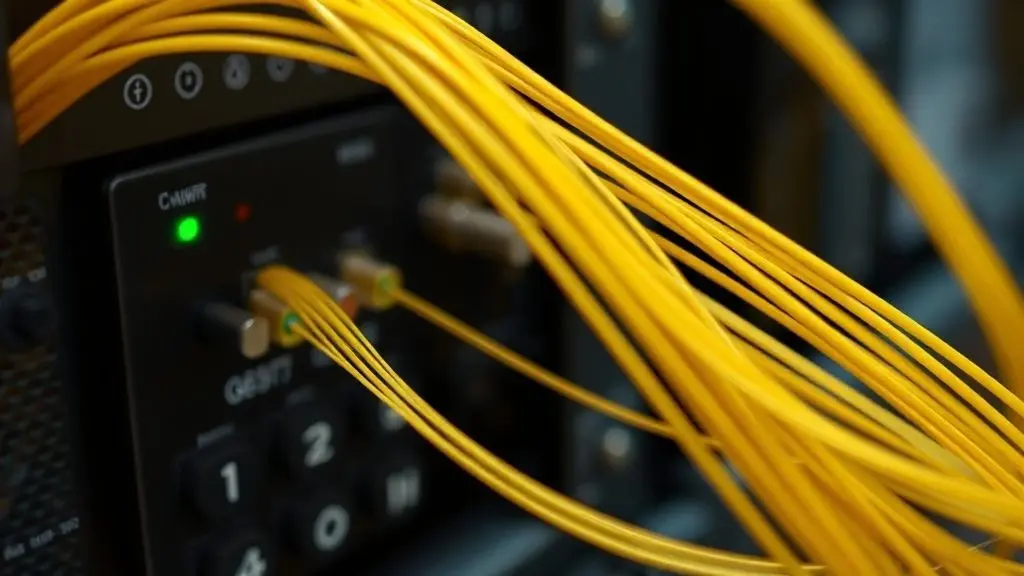
To address the challenges of signal degradation in 5G fronthaul, the industry has turned to G.657.A2 bend-insensitive fiber. This type of fiber is specifically designed to maintain signal integrity even when subjected to tight bends and turns. The G.657.A2 standard, developed by the International Telecommunication Union (ITU), specifies the performance requirements for bend-insensitive fibers, ensuring that they can be deployed in compact and dense environments without compromising on performance.
Key Features of G.657.A2 Fiber
G.657.A2 fiber offers several key advantages over traditional optical fibers:
- Bend Insensitivity: G.657.A2 fiber can withstand tight bends with minimal signal loss, making it ideal for use in compact base stations and other space-constrained environments.
- High Performance: Despite its bend-insensitive properties, G.657.A2 fiber maintains high-performance characteristics, including low attenuation and high bandwidth, ensuring reliable and high-fidelity data transmission.
- Compatibility: G.657.A2 fiber is fully compatible with existing G.652.D fibers, allowing for seamless integration into existing telecom infrastructure without the need for major overhauls.
Winners Communication: A Leader in Specialty Optical Fibers
Winners Communication is at the forefront of developing and manufacturing high-performance optical fibers, including G.657.A2 bend-insensitive fiber. With a strong focus on precision engineering and strict quality control, Winners Communication ensures that their fibers meet the highest standards of reliability and performance. This commitment to excellence has made Winners a trusted partner for telecom operators around the world, providing them with the tools they need to build robust and efficient 5G networks.
Advantages of Winners' G.657.A2 Fiber
When compared to competitors, Winners' G.657.A2 fiber stands out for several reasons:
- Superior Bend Insensitivity: Winners' G.657.A2 fiber has been engineered to provide superior bend insensitivity, allowing for even tighter bends and more flexible routing options.
- Enhanced Durability: The fibers are built to withstand the most demanding environments, ensuring long-term reliability and minimal maintenance.
- Global Compliance: Winners' products comply with international standards, making them suitable for deployment in a wide range of markets and applications.
Market Trends and Implications
The demand for G.657.A2 bend-insensitive fiber is expected to grow as 5G networks continue to expand. Telecom operators are increasingly looking for solutions that can help them overcome the challenges of signal degradation in fronthaul, and G.657.A2 fiber is well-positioned to meet this demand. By adopting G.657.A2 fiber, operators can ensure that their 5G networks are not only fast and reliable but also cost-effective and easy to deploy.
Future Outlook
As 5G technology continues to evolve, the role of high-performance optical fibers like G.657.A2 will become even more critical. Winners Communication is committed to staying at the forefront of this evolution, continuously innovating and improving their fiber solutions to meet the changing needs of the market. With their expertise and commitment to quality, Winners is poised to play a leading role in shaping the future of telecom infrastructure.
Write your comment