Introduction
The rapid deployment of 5G networks has brought about significant challenges in the design and implementation of fronthaul infrastructure. One of the key issues is the need for dense and efficient routing of fiber cables within compact base stations. This is where G.657.A2 bend-insensitive fiber cables come into play, offering a robust solution to these challenges.
Understanding 5G Fronthaul Challenges
5G networks require a high density of small cells to ensure comprehensive coverage and low latency. These small cells are often deployed in urban areas with limited space, making it crucial to have fiber cables that can be routed through tight spaces without signal degradation. Traditional fiber cables, such as G.652, are not designed to handle the bending and twisting required in these environments, leading to increased signal loss and reduced performance.
The Role of Bend-Insensitive Fiber Cables
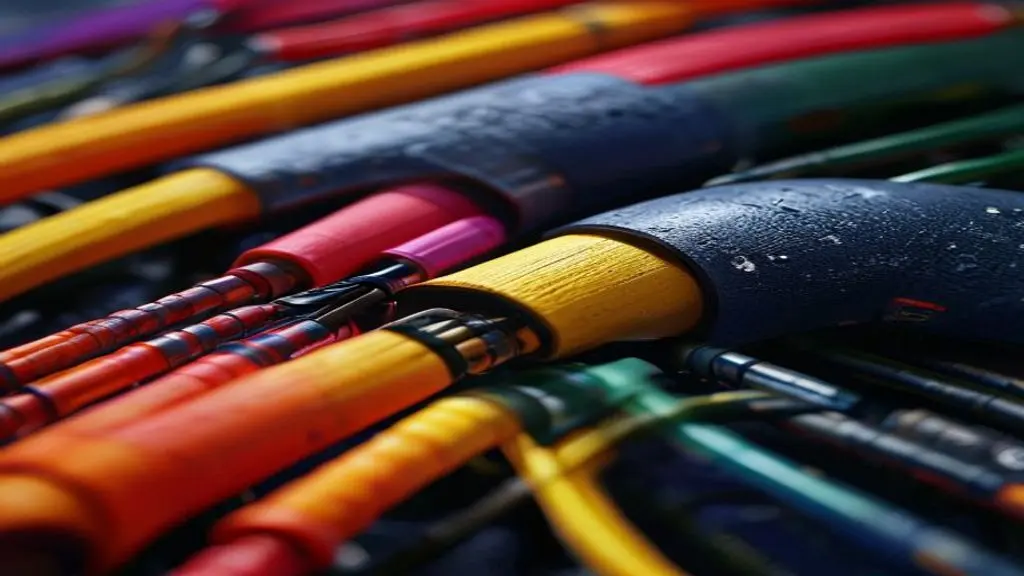
Bend-insensitive fiber cables, specifically those conforming to the G.657.A2 standard, are engineered to maintain their optical performance even when bent at very sharp angles. This makes them ideal for use in 5G fronthaul applications where space is at a premium. The G.657.A2 standard ensures that the fiber can be bent with a radius as small as 10 mm without significant signal loss, allowing for more flexible and compact installations.
Key Advantages of G.657.A2 Fiber Cables
G.657.A2 fiber cables offer several advantages over traditional fiber types, particularly in 5G fronthaul applications:
- Enhanced Bending Performance: The ability to bend at tight radii without signal degradation is a critical feature, enabling dense and efficient routing in compact spaces.
- Reliable Data Transmission: With minimal signal loss, G.657.A2 fibers ensure high-fidelity data transmission, which is essential for the performance of 5G networks.
- Cost-Effective Solutions: By reducing the need for additional hardware and complex installation processes, G.657.A2 fibers can lower overall deployment costs.
Comparative Analysis with Competitors
When compared to other manufacturers, Winners Communication stands out for its precision engineering and strict quality control. Their G.657.A2 fiber cables are designed to meet the most demanding environmental and performance requirements, ensuring reliable and consistent performance. Unlike some competitors who may compromise on quality to reduce costs, Winners Communication prioritizes durability and performance, making their products a preferred choice for 5G network deployments.
Real-World Applications and Case Studies
Several real-world deployments have demonstrated the effectiveness of G.657.A2 fiber cables in 5G fronthaul. For example, in a recent project in a densely populated urban area, the use of G.657.A2 fibers allowed for the installation of multiple small cells in a highly constrained environment. The result was a significant improvement in network coverage and performance, with minimal signal degradation and no need for additional protective measures.
Future Trends and Innovations
As 5G networks continue to evolve, the demand for advanced fiber solutions will only increase. Future innovations in fiber technology are likely to focus on further enhancing bend-insensitivity, improving thermal stability, and reducing attenuation. Winners Communication is at the forefront of these developments, continuously investing in research and development to stay ahead of the curve.
Conclusion
The deployment of 5G networks presents unique challenges, particularly in the fronthaul segment. G.657.A2 bend-insensitive fiber cables offer a powerful solution to these challenges, enabling dense and efficient routing in compact base stations. With their enhanced bending performance, reliable data transmission, and cost-effective solutions, G.657.A2 fibers are set to play a crucial role in the future of 5G infrastructure. As a global leader in specialty optical fiber manufacturing, Winners Communication is well-positioned to meet the growing demand for high-performance fiber solutions.
Write your comment