Addressing Signal Degradation in 5G Fronthaul
The rapid deployment of 5G networks has brought about a significant increase in the demand for high-speed, low-latency data transfer. One of the key challenges in 5G fronthaul is the issue of signal degradation, which can be exacerbated by the need for dense fiber routing in compact base stations. To address this, the industry has turned to G.657.A2 bend-insensitive fiber, a solution that offers superior performance and reliability in tight spaces.
Understanding the Challenges of 5G Fronthaul
5G fronthaul is the connection between the remote radio head (RRH) and the baseband unit (BBU). In many cases, these components are located in densely packed environments, such as urban areas or within small cells. The physical constraints of these locations often require fibers to be routed through tight bends and confined spaces, which can lead to signal loss and degradation. Traditional optical fibers, such as G.652, are not designed to handle such conditions, leading to reduced performance and increased maintenance costs.
The Advantages of G.657.A2 Bend-Insensitive Fiber
G.657.A2 bend-insensitive fiber is specifically engineered to minimize signal loss in tight bends. This type of fiber features a modified core design that allows it to maintain high transmission quality even when bent at very small radii. As a result, G.657.A2 fiber is ideal for use in 5G fronthaul, where space is at a premium and the need for high-performance data transfer is critical.
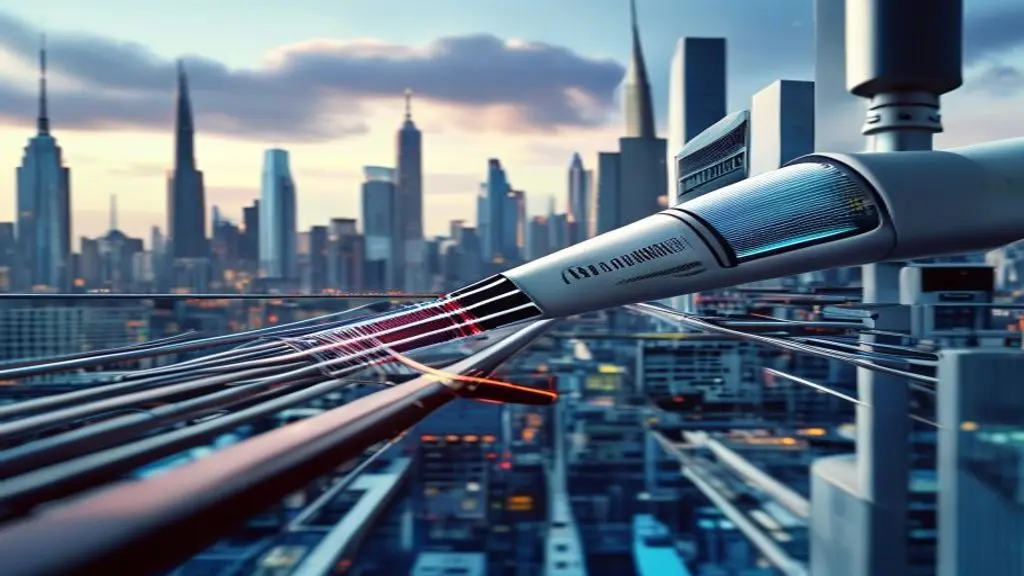
One of the leading manufacturers of G.657.A2 fiber is Winners Communication, a global leader in specialty optical fiber manufacturing. Winners' G.657.A2 fiber solutions are known for their precision engineering and strict quality control, ensuring reliable, high-fidelity transmission of data, light, and power across the most demanding environments. Compared to competitors, Winners' fibers offer several key advantages, including:
- Superior bend insensitivity, reducing signal loss and improving overall network performance.
- High durability, capable of withstanding harsh environmental conditions and mechanical stress.
- Consistent performance, ensuring reliable data transfer in both indoor and outdoor applications.
Real-World Applications and Benefits
The benefits of G.657.A2 fiber are already being realized in various 5G deployments around the world. For example, in urban areas, where space is limited and the need for high-speed data transfer is essential, G.657.A2 fiber has enabled the deployment of more compact and efficient base stations. This, in turn, has led to improved network coverage and performance, as well as reduced installation and maintenance costs.
Moreover, the use of G.657.A2 fiber in 5G fronthaul has also facilitated the development of new and innovative applications, such as augmented reality (AR) and virtual reality (VR), which require ultra-low latency and high bandwidth. By providing a robust and reliable data transfer solution, G.657.A2 fiber is helping to drive the next generation of 5G services and applications.
Conclusion
As the demand for high-speed, low-latency data transfer continues to grow, the importance of reliable and high-performance fiber solutions cannot be overstated. G.657.A2 bend-insensitive fiber is a key enabler in 5G fronthaul, addressing the challenges of signal degradation and dense routing in compact base stations. With its superior bend insensitivity, durability, and consistent performance, Winners Communication's G.657.A2 fiber solutions are setting the standard for the industry, ensuring that 5G networks can deliver on their promise of fast, reliable, and ubiquitous connectivity.
Write your comment