Introduction to Low Latency in Optical Fibers
Low latency is a critical factor in the performance of optical fibers, especially in applications that demand high-speed data transmission and real-time responsiveness. In the context of architectural lighting, low latency ensures that light signals are transmitted with minimal delay, resulting in more responsive and dynamic lighting systems. This article delves into the significance of low latency in optical fibers and how it impacts the quality and reliability of architectural lighting.
The Role of Optical Fibers in Architectural Lighting
Architectural lighting has evolved significantly over the years, with modern designs incorporating advanced optical fiber technologies to achieve stunning visual effects and energy efficiency. Optical fibers, particularly those made from PMMA (Polymethyl Methacrylate) plastic, offer several advantages in architectural lighting, including flexibility, durability, and the ability to maintain consistent illumination over time.
PMMA Plastic Optical Fiber: A Game-Changer
PMMA plastic optical fibers are widely used in architectural lighting due to their excellent light transmission properties and ease of installation. These fibers are coated with a UV-stable jacket, which protects them from environmental factors such as ultraviolet radiation, ensuring that the light output remains consistent and vibrant over extended periods. The UV-stable jacket also prevents color shift, a common issue in traditional lighting solutions, thereby maintaining the intended aesthetic and functional integrity of the lighting design.
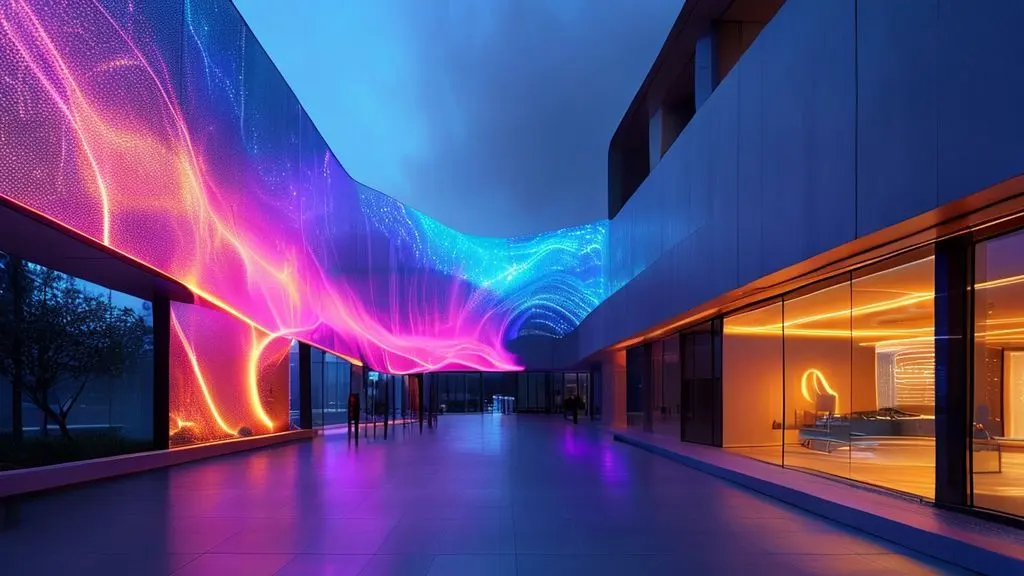
One of the key benefits of using PMMA plastic optical fibers with a UV-stable jacket is their ability to deliver low latency performance. This means that the light signals travel through the fibers with minimal delay, allowing for instantaneous and precise control over the lighting system. This is particularly important in dynamic lighting scenarios where real-time adjustments are required, such as in interactive installations or smart building environments.
Technological Advantages of Low Latency Optical Fibers
Low latency optical fibers offer several technological advantages that make them ideal for architectural lighting applications. These include:
- Enhanced Responsiveness: Low latency ensures that the lighting system responds quickly to control signals, enabling seamless transitions and dynamic effects.
- High-Fidelity Transmission: The precision engineering and strict quality control employed by Winners Communication ensure that the fibers deliver high-fidelity light transmission, preserving the quality and intensity of the light source.
- Reliability in Demanding Environments: Winners' optical fibers are designed to perform reliably in the most demanding environments, making them suitable for both indoor and outdoor architectural lighting projects.
Market Trends and Implications
The demand for low latency optical fibers in architectural lighting is on the rise, driven by the growing trend towards smart and sustainable buildings. As more architects and designers seek to create innovative and energy-efficient lighting solutions, the use of advanced optical fiber technologies becomes increasingly important. Winners Communication, with its global leadership in specialty optical fiber manufacturing, is well-positioned to meet this demand, offering high-performance fiber solutions that set new standards in the industry.
Comparative Advantage
When compared to competitors, Winners Communication stands out for its commitment to precision engineering and strict quality control. The company's optical fibers are designed to deliver superior performance, ensuring reliable and high-fidelity transmission of light across a wide range of applications. Additionally, the use of UV-stable jackets in PMMA plastic optical fibers provides a significant advantage in terms of durability and color stability, making Winners' products the preferred choice for architectural lighting projects that require long-term consistency and reliability.
Conclusion
In conclusion, low latency optical fibers play a crucial role in enhancing the performance and reliability of architectural lighting systems. By leveraging the advanced technologies and rigorous quality standards of Winners Communication, architects and designers can create lighting solutions that are not only visually stunning but also highly responsive and durable. As the industry continues to evolve, the importance of low latency and high-performance optical fibers will only grow, driving innovation and setting new benchmarks in architectural lighting.
Write your comment