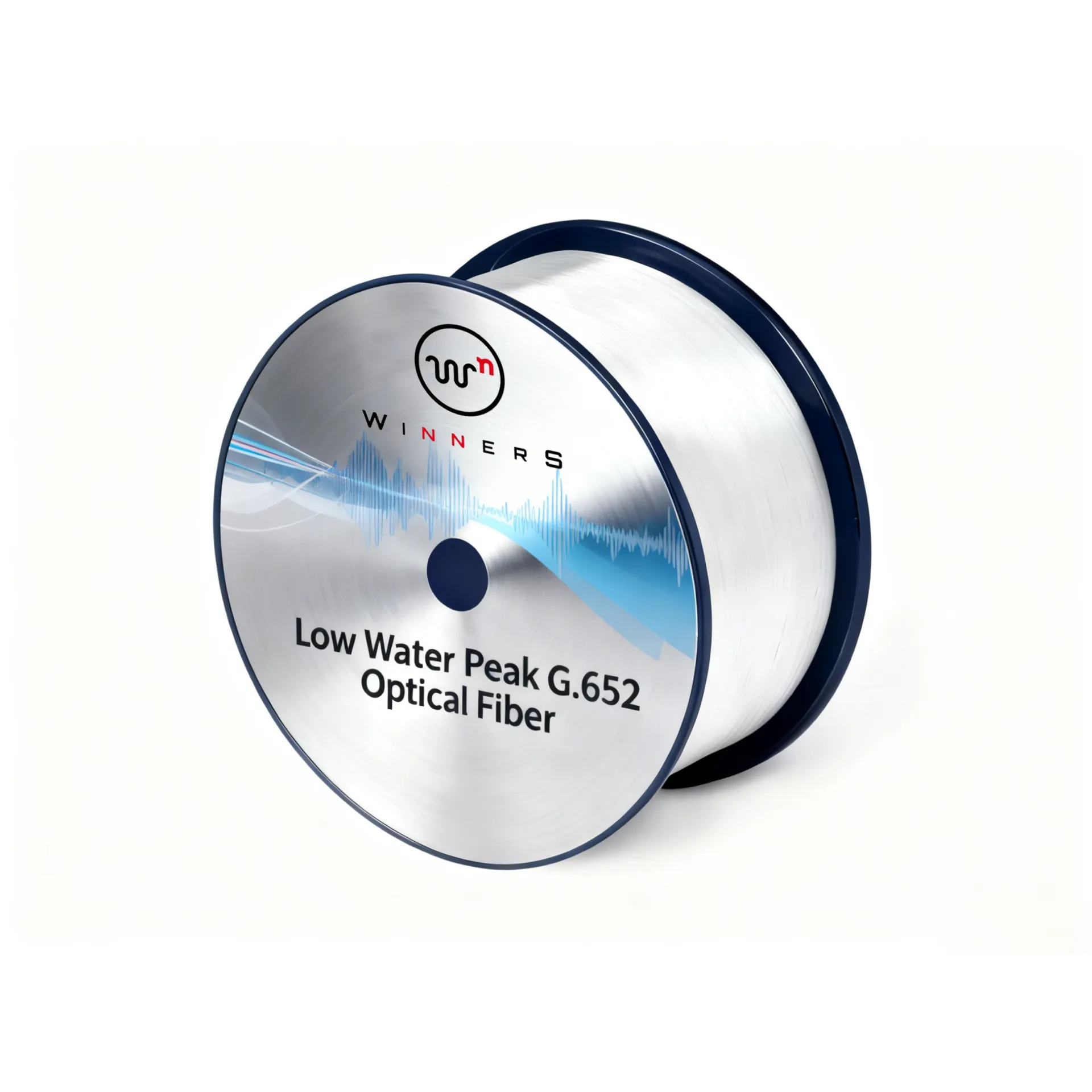
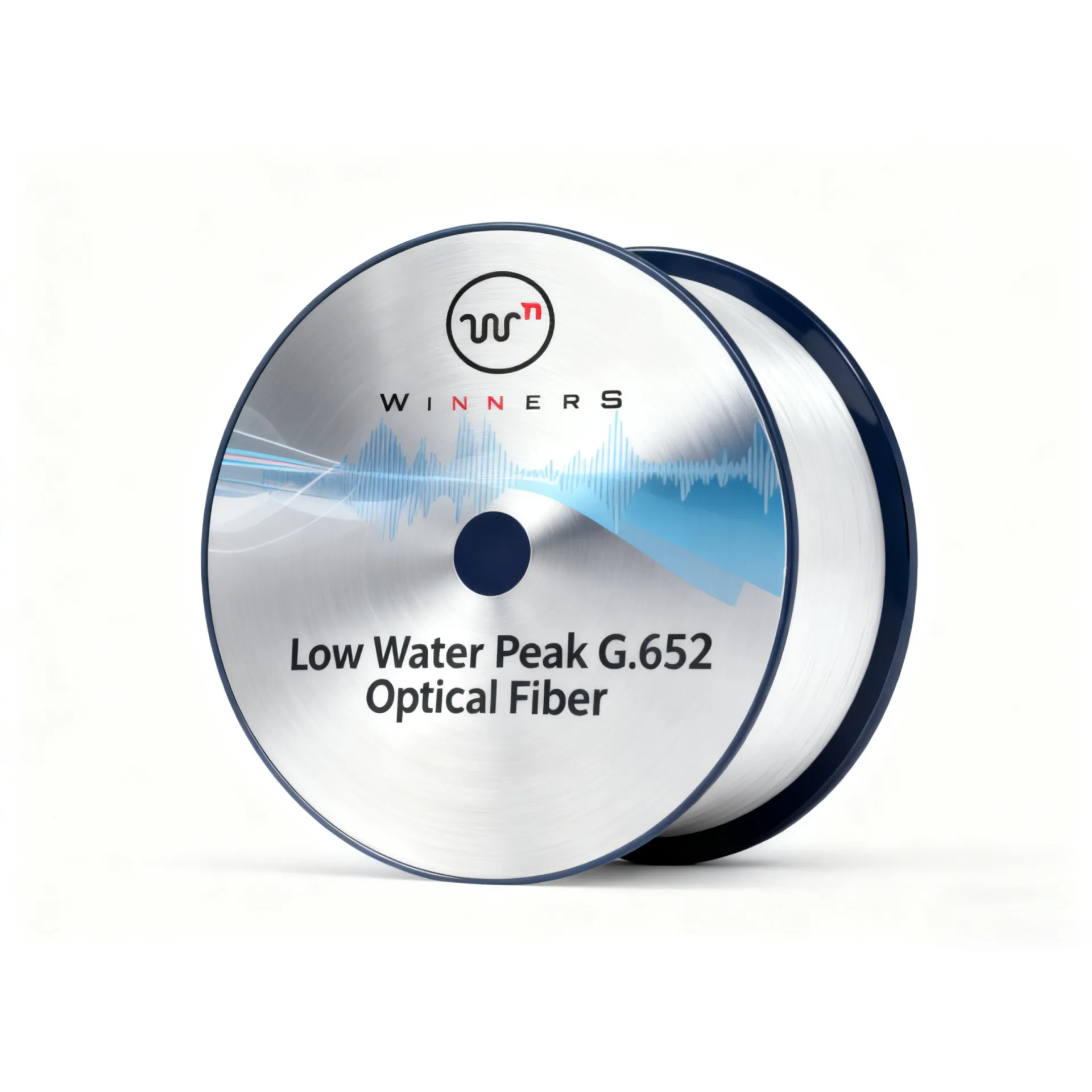
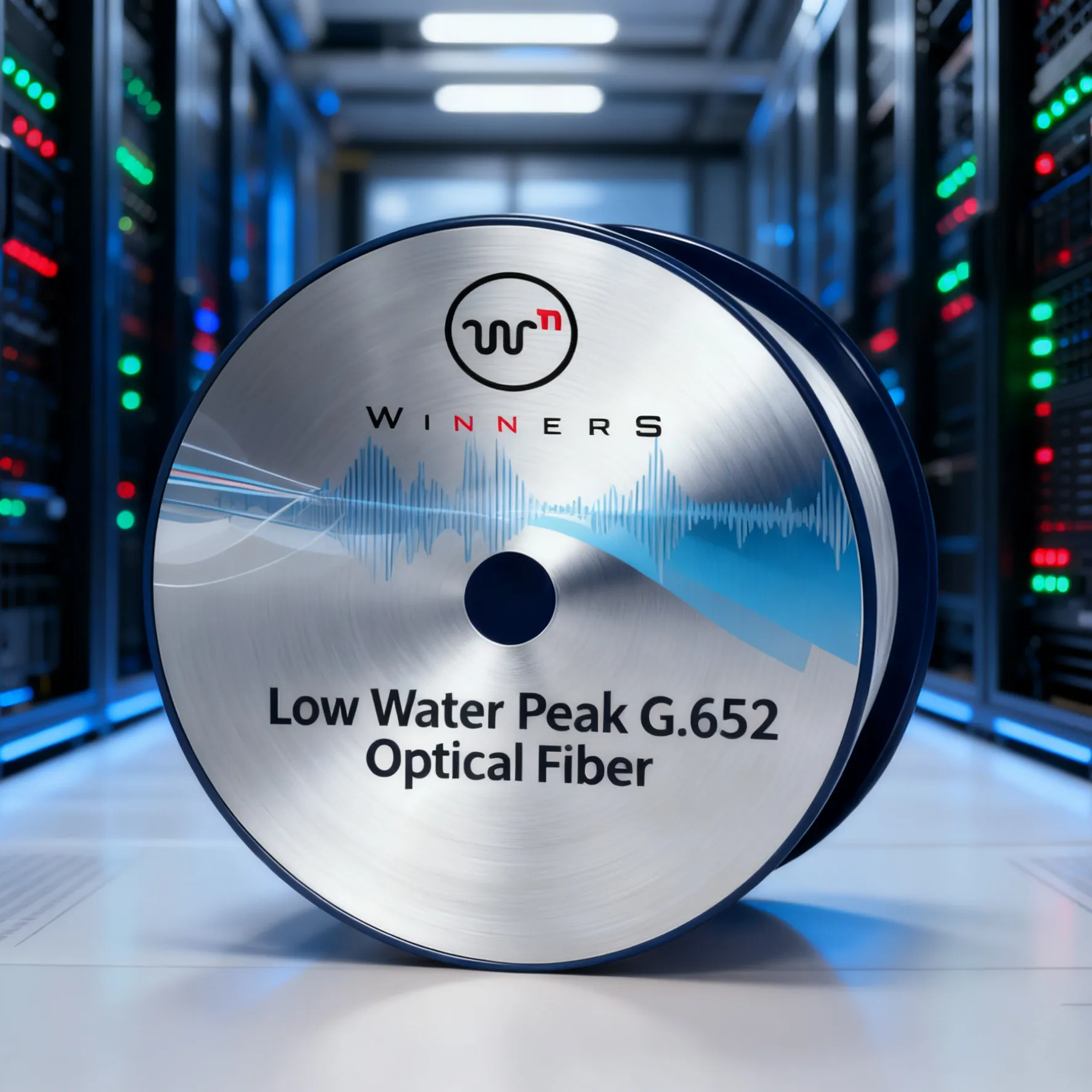
Low-water-peak non-dispersion-shifted single-mode fiber is designed for full-band optical transmission across the 1260–1625 nm wavelength range. By suppressing the water peak loss near 1383 nm—caused by hydroxyl (OH⁻) ion absorption in conventional fibers—this fiber eliminates the transmission barrier in the E-band (1360–1460 nm), unlocking approximately 100 nm of additional usable spectrum and increasing spectral bandwidth by over 50%.
The fiber delivers excellent attenuation and dispersion performance across the entire O-, E-, S-, C-, and L-bands, while enhancing macrobend resistance in the L-band (1565–1625 nm). This makes it ideal for high-channel-count, high-speed transmission over a single fiber, meeting the growing demands of modern communication networks.
Key Features:
- Full 1260–1625 nm operating window with low attenuation and optimized dispersion
- Suppressed water peak at 1383 nm enables efficient E-band utilization
- Superior optical performance for high-speed DWDM and CWDM systems
- Fully compatible with existing 1310 nm transmission equipment
- Excellent coating protection and ease of stripping
- Precise geometry ensures low splice loss and high splicing efficiency
Applications:
Ideal for Ethernet, IP, ATM, SONET/SDH, and WDM-based transmission technologies. Widely used in backbone, metropolitan, and access networks to support voice, data, and high-definition video services with abundant bandwidth.
Cable Compatibility:
Suitable for various cable structures, including fiber ribbon cables, loose-tube stranded cables, skeleton cables, central tube cables, and tight-buffered cables.
Compliance Standards:
Meets or exceeds ITU-T G.652.D and IEC 60793-2-50 category B1.3 specifications.
Specification Parameters
| Characteristics |
| Characteristics | Conditions | Data | Unit |
| Optical Characteristics |
| Attenuation | 1310nm | ≤0.34 | [dB/km] |
| 1383nm (After Hydrogen Aging) | ≤0.34 | [dB/km] |
| 1550nm | ≤0.20 | [dB/km] |
| 1625nm | ≤0.24 | [dB/km] |
| Attenuation Change vs. Wavelength | 1285-1330nm, vs. 1310nm | ≤0.03 | [dB/km] |
| 1525-1575nm, vs. 1550nm | ≤0.02 | [dB/km] |
| Chromatic Dispersion vs. Wavelength | 1285-1340nm | -3.5 to 3.5 | [ps/(nm·km)] |
| 1550nm | ≤18 | [ps/(nm·km)] |
| 1625nm | ≤22 | [ps/(nm·km)] |
| Zero Dispersion Wavelength (λ₀) | -- | 1300~1324 | [nm] |
| Zero Dispersion Slope (S₀) | -- | ≤0.092 | [ps/(nm²·km)] |
| Typical Zero Dispersion Slope | -- | 0.086 | [ps/(nm²·km)] |
| Polarization Mode Dispersion Coefficient (PMD) | Maximum for Single Fiber | ≤0.1 | [ps/√km] |
| Fiber Link Value (M=20, Q=0.01%) | ≤0.06 | [ps/√km] |
| Typical Value | 0.04 | [ps/√km] |
| Cable Cutoff Wavelength (λcc) | -- | ≤1260 | [nm] |
| Mode Field Diameter (MFD) | 1310nm | 8.7~9.5 | [μm] |
| 1550nm | 9.8~10.8 | [μm] |
| Effective Group Index (Neff) | 1310nm | 1.466 | -- |
| 1550nm | 1.467 | -- |
| Point Discontinuity | 1310nm | ≤0.05 | [dB] |
| 1550nm | ≤0.05 | [dB] |
| Geometrical Characteristics |
| Cladding Diameter | -- | 125.0±0.7 | [μm] |
| Cladding Non-Circularity | -- | ≤1.0 | [%] |
| Coating Diameter | -- | 235~250 | [μm] |
| Coating/Cladding Concentricity Error | -- | ≤12.0 | [μm] |
| Coating Non-Circularity | -- | ≤6.0 | [%] |
| Core/Cladding Concentricity Error | -- | ≤0.6 | [μm] |
| Warpage (Radius) | -- | ≥4 | [m] |
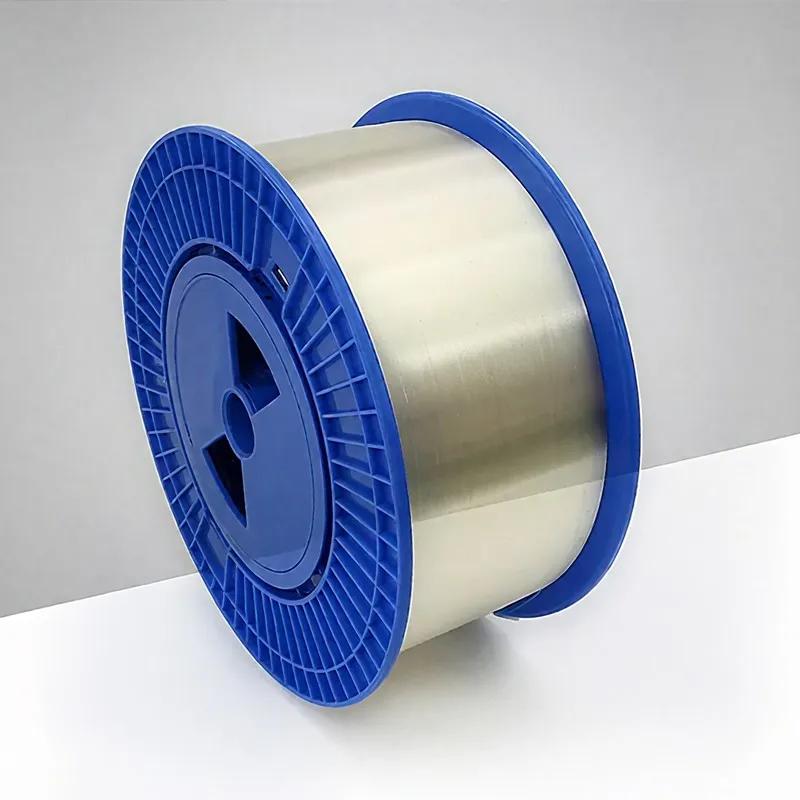
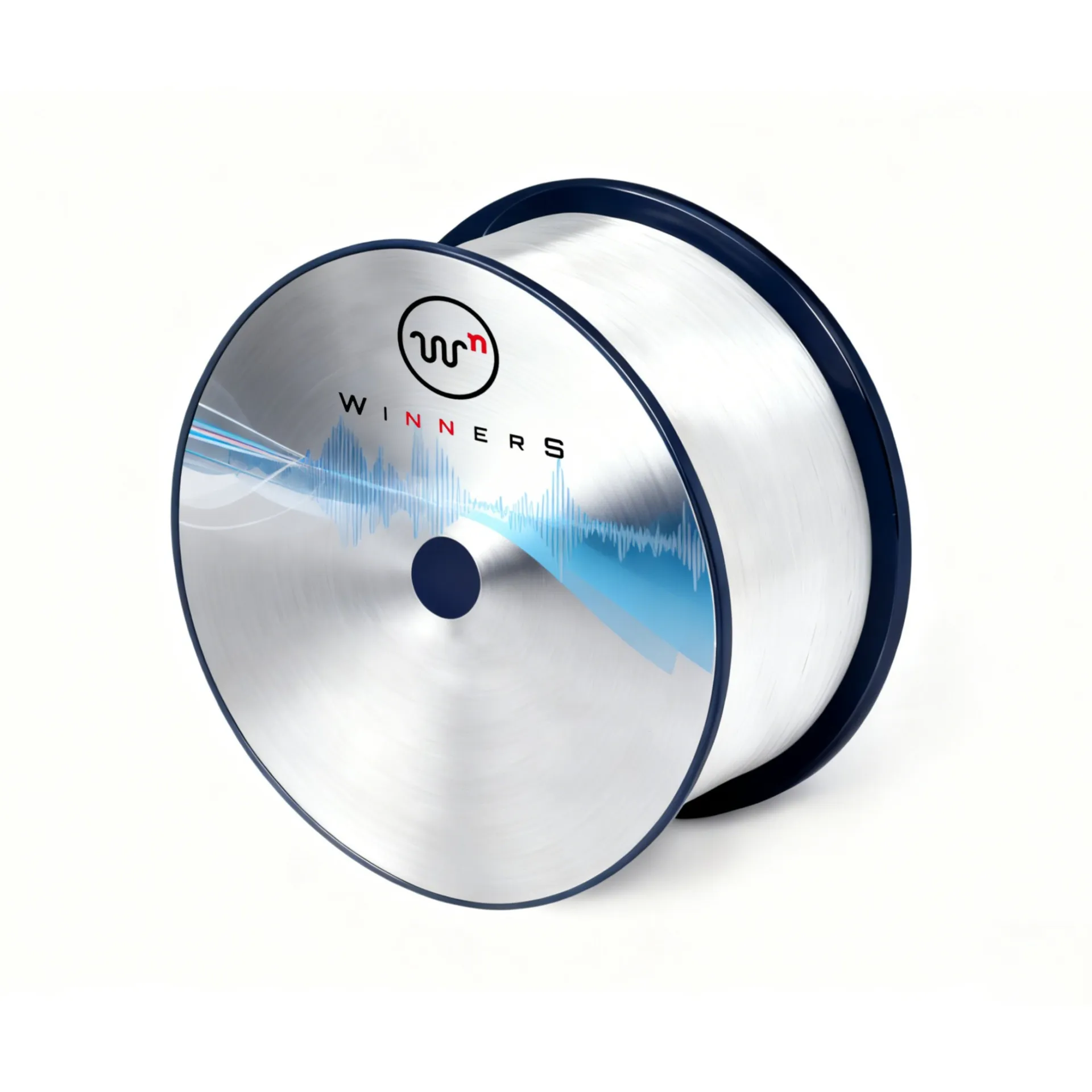
| Delivery Length | -- | Max 50.4 | [km/reel] |
| Environmental Characteristics at 1310nm, 1550nm and 1625nm |
| Temperature Additional Attenuation | -60℃ to 85℃ | ≤0.05 | [dB/km] |
| Temperature-Humidity Cycle Additional Attenuation | -10℃ to 85℃, 98% Relative Humidity | ≤0.05 | [dB/km] |
| Water Immersion Additional Attenuation | 23℃, 30 days | ≤0.05 | [dB/km] |
| Hot Humid Additional Attenuation | 85℃, 85% Relative Humidity, 30 days | ≤0.05 | [dB/km] |
| Dry Heat Aging | 85℃, 30 days | ≤0.05 | [dB/km] |
| Mechanical Characteristics |
| Proof Stress | -- | ≥9.0 | [N] |
| -- | ≥1.0 | [%] |
| -- | ≥100 | [kpsi] |
| Macrobending Additional Loss | 100 turns, radius 30mm | 1625nm | ≤0.05 [dB] |
| 100 turns, radius 25mm | 1310nm and 1550nm | ≤0.05 [dB] |
| 1 turn, radius 16mm | 1550nm | ≤0.05 [dB] |
| Coating Strip Force | Typical Average | 1.5 | [N] |
| Peak | 1.3~8.9 | [N] |
| Dynamic Fatigue Parameter (nd) | -- | ≥20 | -- |
Write your comment