1. Introduction
The rapid evolution of medical technology has placed increasing demands on precision, minimally invasive capabilities, and real-time data acquisition. Fiber optic technology has emerged as a transformative enabler in healthcare, offering unmatched performance in signal transmission, sensing, and energy delivery. With inherent advantages such as immunity to electromagnetic interference (EMI), small footprint, high bandwidth, and electrical isolation, optical fibers are now integral to advanced diagnostic, therapeutic, and monitoring systems. This white paper presents a professional-grade fiber optic solution tailored for medical applications, addressing clinical needs with technological rigor and forward-looking design.
2. Core Advantages of Fiber Optics in Medicine
- High Bandwidth & Low Loss Transmission: Single-mode fibers enable kilometer-range transmission with minimal signal degradation, ideal for high-definition endoscopic imaging and telemedicine.
- EMI Immunity: Ensures reliable operation in MRI suites, operating rooms with electrosurgical units, and ICU environments.
- Miniaturization & Flexibility: Fibers with core diameters under 100 μm can be integrated into catheters, needles, or implantable devices for intravascular or intracranial access.
- Intrinsic Safety: Non-conductive nature eliminates electrical leakage risks, making it suitable for use in cardiac and neural tissues.
- Multiparametric Sensing: Utilizing WDM, TDM, and advanced modulation techniques, a single fiber can simultaneously monitor temperature, pressure, strain, pH, and biochemical markers.

3. Key Application Areas and Technical Solutions
3.1 Medical Imaging and Endoscopic Diagnosis
Solution: Fiber-Based Confocal Microscopy (FCM) and Optical Coherence Tomography (OCT)
- Technology Overview:FCM uses a focused laser beam scanned via a fiber-optic micro-probe to achieve sub-cellular resolution (<1 μm) in vivo.OCT employs low-coherence interferometry to generate cross-sectional images with axial resolution of 10–15 μm and penetration depth of 2–3 mm.
- Clinical Applications:Early detection of gastrointestinal cancers (e.g., Barrett’s esophagus, colorectal adenomas).Intraoperative tumor margin assessment in neurosurgery and breast oncology.Guided biopsy with real-time histological feedback, reducing false negatives.
- System Configuration:Flexible fiber bundle (400–600 single-mode fibers) with MEMS scanning tip.Supercontinuum laser source (450–1650 nm bandwidth).High-speed data acquisition (≥1 GS/s) with GPU-accelerated processing.AI-powered image analysis for automated lesion detection and classification.
3.2 Laser Therapy and Photodynamic Treatment
Solution: Fiber-Coupled Laser Delivery Systems
- System Architecture:Laser Sources: Nd:YAG (1064 nm), Ho:YAG (2100 nm), Er:YAG (2940 nm), or diode lasers (630–850 nm).Delivery Fibers: Silica-core fibers (200–600 μm core), NA 0.22–0.39, power handling >50 W.Tip Configurations: Radial, side-firing, diffusing, or cutting tips for tissue ablation, coagulation, or lithotripsy.
- Clinical Indications:Urology: Holmium Laser Enucleation of the Prostate (HoLEP), laser lithotripsy.Oncology: Laser Interstitial Thermal Therapy (LITT) for brain and liver tumors.Dermatology: Selective photothermolysis of vascular and pigmented lesions.Dentistry: Caries removal and periodontal treatment.
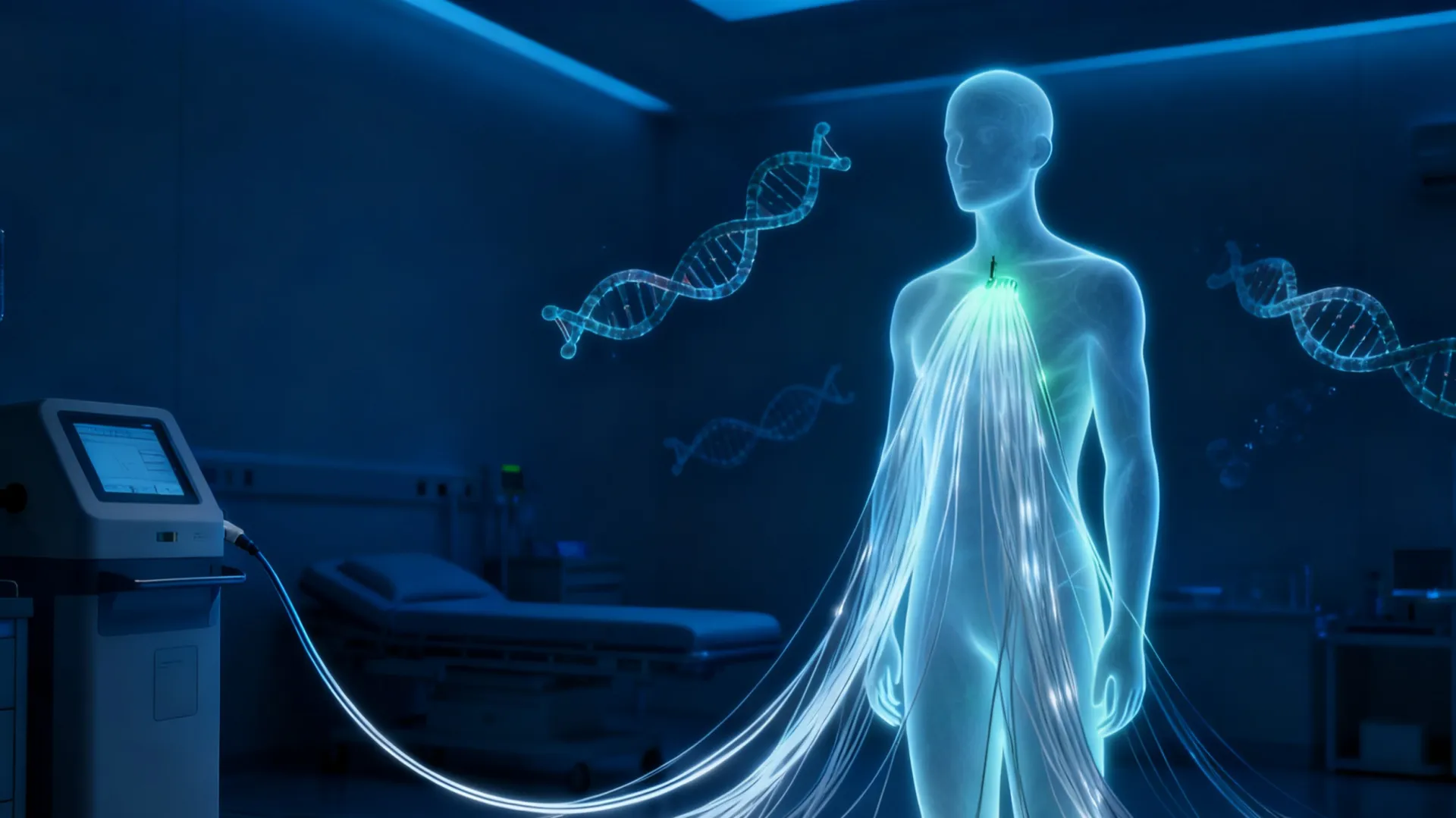
- Intelligent Control Features:Embedded FBG (Fiber Bragg Grating) sensors for real-time temperature feedback.Closed-loop power regulation to maintain therapeutic temperature (55–70°C).Overheating protection with automatic shutdown and audible alerts.
4. Physiological Monitoring Systems
4.1 Fiber Optic Multimodal Sensing Platform
| Parameter | Sensor Type | Principle | Accuracy |
|---|---|---|---|
| Temperature | FBG Sensor | Wavelength shift Δλ ∝ ΔT | ±0.1°C |
| Blood Pressure | Fabry-Pérot (F-P) Cavity | Diaphragm deformation alters interference | ±1 mmHg |
| Intracardiac Pressure | Microstructured Fiber SPR | Refractive index change detection | High sensitivity |
| pH Level | Fluorescence Lifetime Probe | H⁺-dependent decay time of dye | ±0.05 pH |
- Integration and Deployment:
5. Surgical Navigation and Robotic Assistance
Solution: Distributed Acoustic Sensing (DAS) for Haptic Feedback in Robotic Surgery
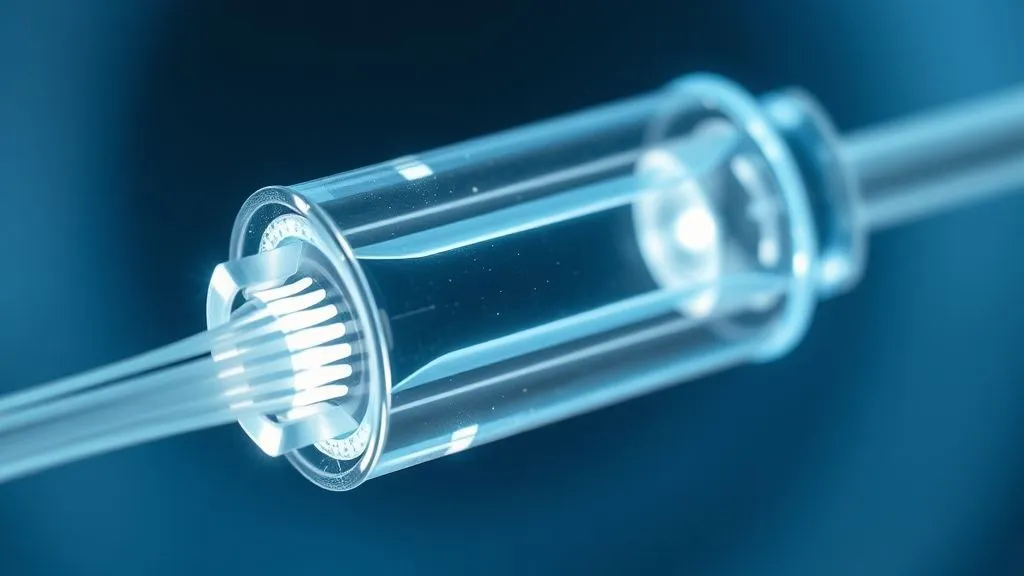
- Functional Overview:Microbend-sensitive fibers integrated into robotic arms and instrument channels.Real-time detection of contact force, torque, and tissue elasticity.Haptic rendering algorithm provides realistic tactile feedback to the surgeon.
- Performance Metrics:Force resolution: <0.01 NResponse latency: <5 msSpatial accuracy: <0.5 mm
- Clinical Impact:Enhances precision in minimally invasive and telesurgery.Reduces complications such as vessel perforation or tissue tearing.Supports training and skill assessment for surgical residents.
6. Safety, Compliance, and Data Security
- Biocompatibility:All patient-contact materials meet USP Class VI and ISO 10993 standards (cytotoxicity, sensitization, irritation testing).Hermetic coating (e.g., gold/polyimide) for implantable sensors.
- Electrical Safety:Double insulation and grounding per IEC 60601-1.Optical isolation ensures leakage current <10 μA.
- Cybersecurity & Privacy:End-to-end TLS 1.3 encryption for data transmission.HIPAA, GDPR, and China PIPL compliance.Role-based access control and audit logging.
7. Implementation Roadmap
| Phase | Duration | Key Objectives |
|---|---|---|
| Phase I: Pilot Deployment | 0–6 months | Deploy OCT/FBG systems in 1–2 departments (e.g., Endoscopy, IR); train staff; establish SOPs. |
| Phase II: Clinical Expansion | 6–18 months | Scale to cardiology, neurosurgery; integrate with EMR; pursue FDA/CE/NMPA clearance. |
| Phase III: Intelligent Integration | 18–36 months | Introduce AI-driven diagnostics; develop cloud-based telemonitoring; launch wearable variants. |
8. Economic and Clinical Value
- Direct Benefits:Reduction in average hospital stay by 1.5–2 days.20%+ decrease in postoperative complications.30–50% improvement in early cancer detection rates.
- Strategic Value:Supports academic medical center development and specialty accreditation.Optimizes healthcare resource utilization and reduces unnecessary procedures.Establishes a data-driven, patient-centric care model.
9. Conclusion
Fiber optic technology is redefining the boundaries of medical innovation. From cellular-level imaging to intelligent surgical robotics, its integration enables safer, more precise, and more efficient healthcare delivery. This solution provides a scalable, compliant, and future-ready framework for hospitals and medical device developers. By partnering with research institutions and technology providers, healthcare organizations can accelerate the adoption of fiber-based systems, ultimately advancing the standard of patient care in the era of precision medicine.
Write your comment